
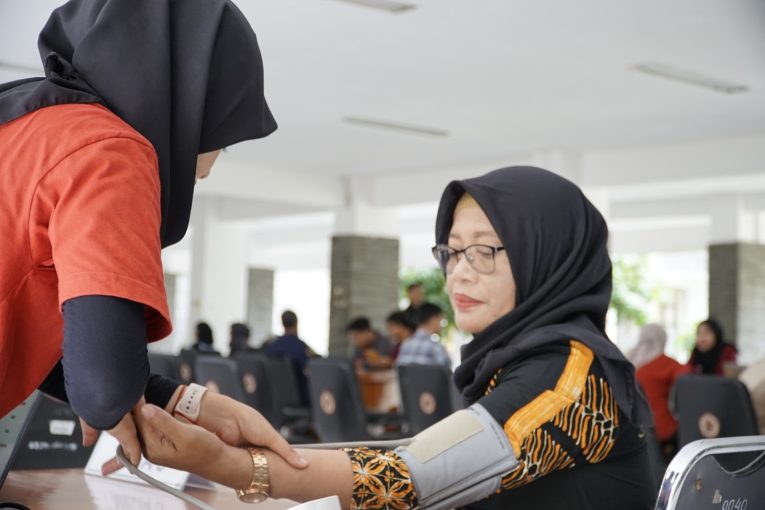
The Faculty of Philosophy at Universitas Gadjah Mada (UGM) held its second Integrated Development Post for Non-Communicable Diseases (Posbindu PTM) on February 13, 2026. The event followed its inaugural implementation at the end of 2025 and forms part of an ongoing effort to enhance health awareness and monitoring among the academic community.
A total of 87 participants took part in the program, marking an increase from the previous session. Participants represented a broad cross-section of the faculty, including lecturers, administrative staff, students, outsourced workers, daily staff, and canteen personnel. This wide participation reflects the faculty’s inclusive approach to fostering a culture of healthy living across the entire campus community.
The health screening activities were carried out by trained administrative staff serving as health cadres, with support from nutrition experts from Gadjah Mada Medical Center (GMC). Basic examinations included blood pressure measurement, weight checks, and other health indicators, aimed at providing an initial overview of participants’ health conditions along with preventive recommendations.
Head of the Administrative Office of the Faculty of Philosophy, Zainal Mustofa, stated that the initiative represents an important step in promoting collective health awareness within the faculty. “Through this early screening, we hope that potential non-communicable diseases can be detected at an early stage, thereby reducing risks to productivity and quality of life,” he said.
The Posbindu PTM program is planned to be conducted regularly every three months as part of a continuous health monitoring system. Through this initiative, members of the academic community are expected not only to become more aware of their health conditions but also to take concrete steps toward maintaining and improving their quality of life.
With this program, the Faculty of Philosophy UGM reaffirmed its commitment to supporting the overall well-being of its academic community—not only in intellectual development but also in physical health as a key foundation for productivity and the sustainability of academic activities.